How a chilled water system works
Instead of cooling air directly, a chiller cools water — typically to around 44°F — and pumps it to air handlers and fan coils throughout the building, which use it to cool and dehumidify air zone by zone. The chiller's refrigeration circuit moves the collected heat to a condenser, which rejects it outdoors. One machine, one loop, a whole building — that centralization is why chillers own the market above roughly 100 tons.
Air-cooled vs. water-cooled
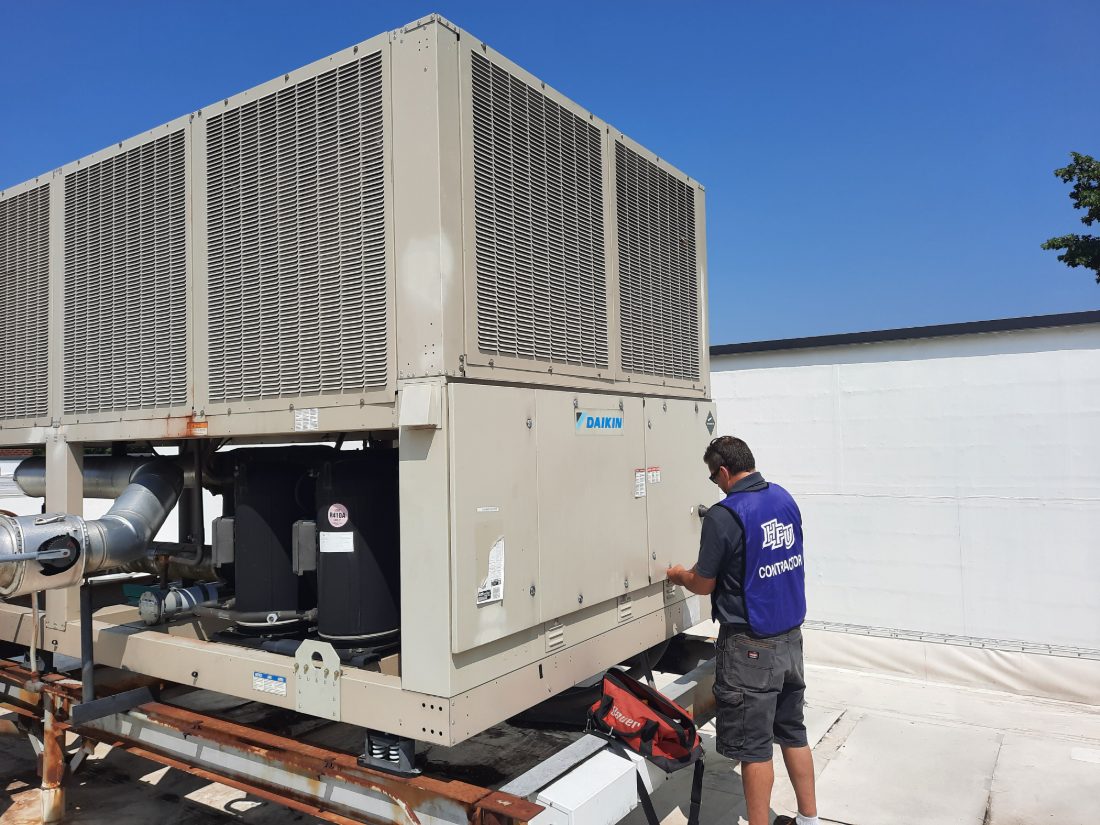
Air-cooled chillers reject heat through outdoor coils and fans — simpler, no water treatment, typical life 15 to 20 years. Water-cooled chillers reject heat through a condenser water loop and a cooling tower — more efficient, longer-lived (20 to 30 years), but with a tower, pumps, and water chemistry to manage. Small and mid-size plants have drifted air-cooled; big plants and high-rises stay water-cooled for the efficiency.
What ownership involves
A chiller plant is a system: the machine, pumps, piping, controls, and possibly a tower. The maintenance that determines lifespan is unglamorous — condenser tube cleaning, water treatment, oil and refrigerant analysis, vibration trending, sensor calibration. Skip it and you get the failure pattern in our chiller troubleshooting guide; keep it and machines reach the far end of their lifespan range.
Who should service it
Chiller work is specialist work — refrigerant handling at scale, machine-specific controls, and repairs where a wrong move costs five figures. We self-perform chiller, boiler, and tower service across the Triad, Charlotte, and the Southeast, quote per machine in writing, and will give you an honest condition read on an aging plant.