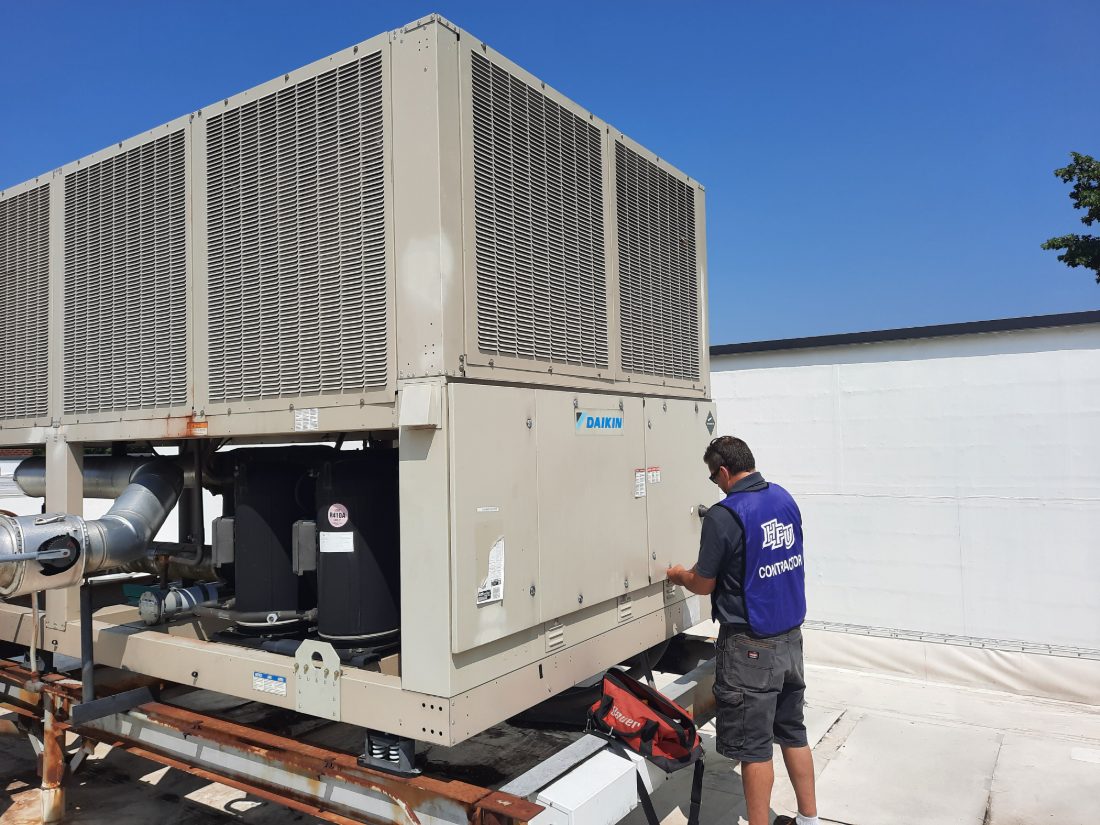
What the compressor actually does
The compressor is the pump at the center of the refrigeration circuit — it takes cool, low-pressure refrigerant vapor and compresses it into hot, high-pressure vapor so the condenser can reject heat outdoors. Everything else in the system exists to feed the compressor clean, dry, correctly-metered refrigerant. That is also why most compressor failures are not really compressor failures: they are the compressor dying from someone else's problem.
The four types you'll meet
Reciprocating compressors — pistons and valves — are the old workhorses, still common in refrigeration and older equipment. Scroll compressors dominate modern rooftop units and splits: two spiral scrolls, almost no moving parts, quiet and efficient — but not rebuildable. Screw compressors handle large tonnage in big air-cooled and water-cooled chillers. Centrifugal compressors serve the largest water-cooled chillers, where capacity is measured in hundreds of tons. Housing matters too: welded hermetic compressors are replace-only, while semi-hermetic compressors are bolted together and can be opened and rebuilt.
Why compressors fail
The classic killers: liquid refrigerant slugging into the compressor from a metering or charge problem; overheating from a dirty condenser coil or low charge; electrical failure from a weak capacitor or contactor arcing; acid in the system after a previous burnout that was never cleaned up; and plain old short-cycling. Nearly all of these are detectable months in advance — amp draws, superheat, oil condition — which is what a maintenance visit is for.
Compressor swap or new unit?
On a newer unit, a compressor replacement under parts warranty is usually the right call. On a 12-to-15-year-old rooftop unit, think hard: you would be putting the most expensive possible repair into a machine near the end of its life, with old coils and an obsolete refrigerant. We quote both paths in writing — compressor and unit — so the decision is math, not pressure. Contact us for service call pricing on diagnostics.