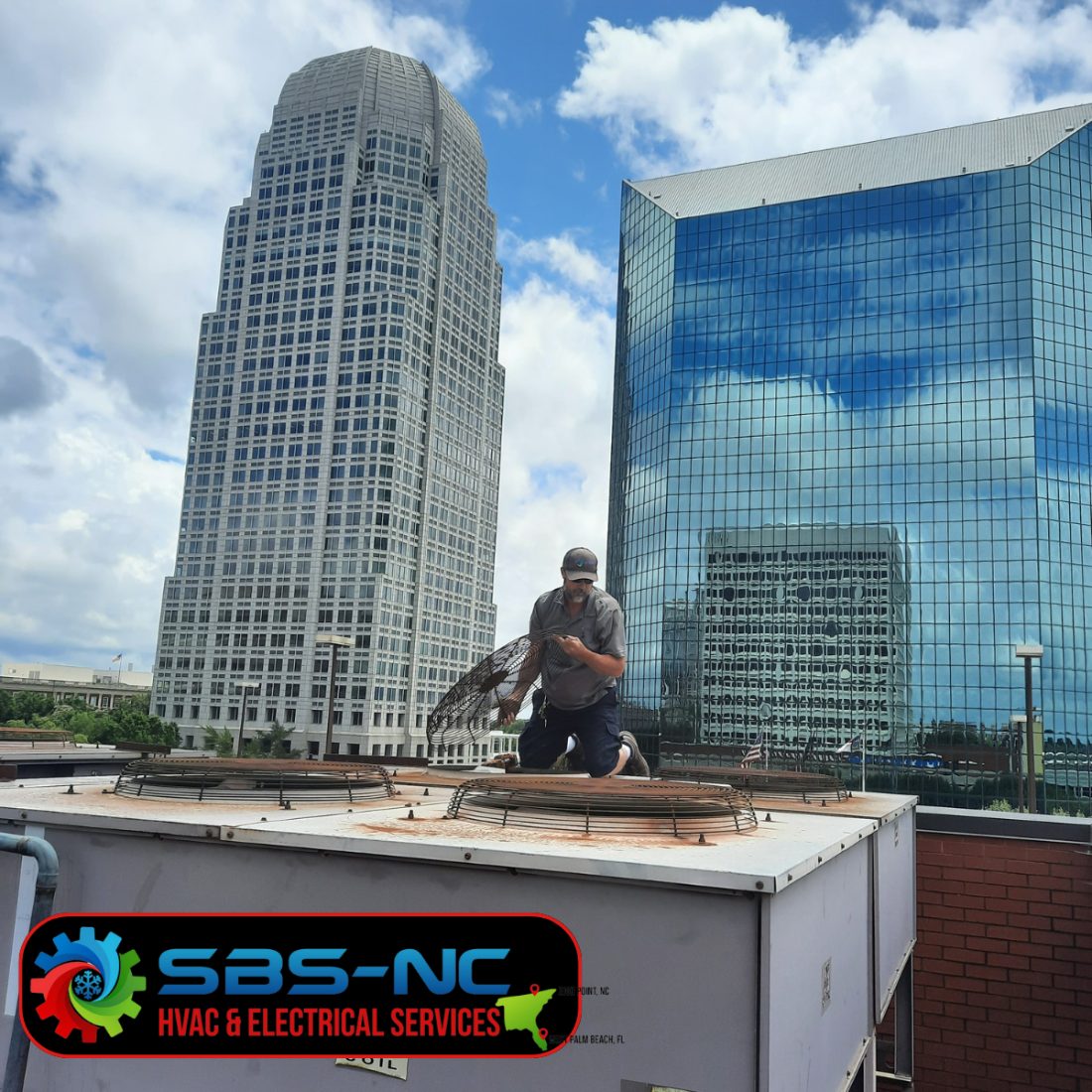
One cabinet, whole system
A rooftop package unit puts the entire HVAC system in a single weatherproof cabinet: compressors, condenser and evaporator coils, supply blower, gas or electric heat, filters, and controls. It sits on a roof curb, ducts drop straight into the space below, and outside air comes in through an economizer hood. That self-contained design is why RTUs rule commercial buildings: no machine room, no refrigerant piping through the building, and replacement is a crane day instead of a construction project.
The parts that matter
The compressors do the cooling work and cost the most. The economizer — dampers that pull in outside air for free cooling when the weather allows — is the most commonly broken and most commonly ignored component; a stuck economizer quietly costs energy every shoulder-season day. Belts, bearings, contactors, capacitors, and condensate drains make up the routine-failure list, and every one of them is cheaper caught on a scheduled visit.
Lifespan and the replacement decision
Plan on 15 to 20 years from a maintained RTU in the Carolinas; neglected units start failing major components years earlier. Past year 12, put every big repair through the repair-vs-replace test — new units carry meaningfully better part-load efficiency, and a compressor-priced repair on a 15-year-old machine rarely pencils.
What maintenance costs
Our PM pricing is published and per-unit: $200 for the first RTU at a site, $149 each additional, and $149 on every unit once a site has four or more. Each visit covers coils, filters, belts, electrical, refrigerant performance, economizer operation, and drains, with a written per-unit report. Compare that to what deferred maintenance actually costs and the math is short.